Iran says 210 children killed, 300 medical centers damaged in US-Israeli attacks

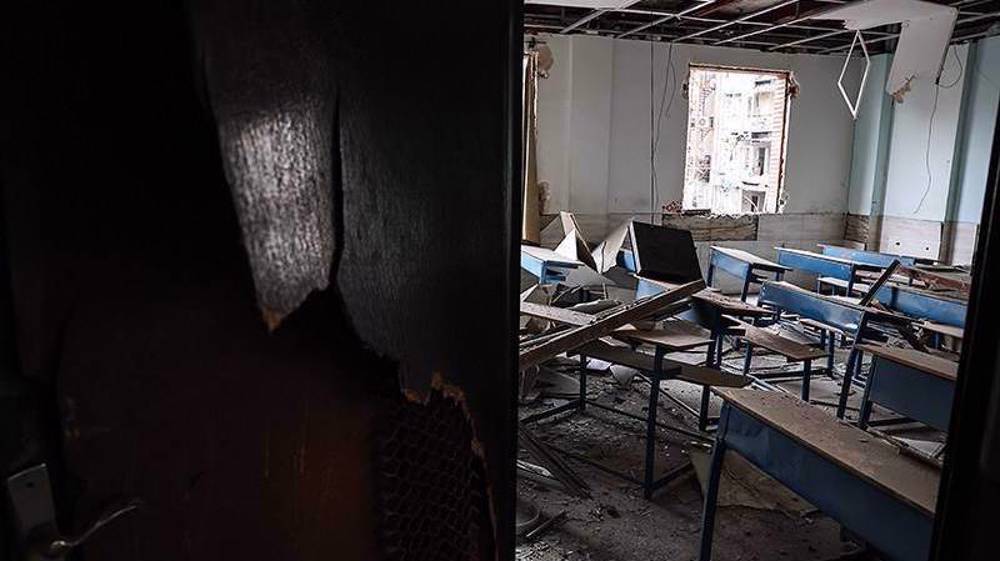
Iran’s minister of health says at least 210 children have lost their lives, and over 1,510 have been injured in US-Israeli attacks across the country.
Mohammadteza Zafarqandi made the remarks during a press briefing on the sidelines of a visit to a hospital in Tehran on Sunday, noting that the impact of the aggression extends far beyond the battlefield, affecting civilians, especially women and children, who are caught in the crossfire.
He further reported that nearly 300 medical facilities, including hospitals and emergency centers, have suffered significant damage since the war began on February 28.
About 30 ambulances have also been damaged and lifesaving services are severely compromised, he added.
Zafarghandi further decried the attacks on healthcare facilities, referencing a statement from Tedros Adhanom Ghebreyesus, the head of the World Health Organization (WHO).
In a tweet, Ghebreyesus had labeled the assault on the Minab school in southern Iran as a crime against humanity, emphasizing that these incidents cannot be dismissed as mere miscalculations.
He paid tribute to the 23 healthcare professionals who have died while providing care during this tumultuous time.
The minister further assured the public that the healthcare system has continued to function effectively despite the current crisis and war conditions.
In the city of Kashan, a huge crowd attended the funeral procession of IRGC spokesman Brigadier General Ali Mohammad Naeini, who was assassinated in US-Israeli raids.
— Press TV 🔻 (@PressTV) March 22, 2026
Follow: https://t.co/B3zXG73Jym pic.twitter.com/BwMGgDRQKv
He went on to say that Iran has maintained the operation of its healthcare services without interruption, adding that unlike many countries involved in war, routine medical care, vaccination programs for children, and emergency services remain available.
Zafarghandi also stated that the Planning and Budget Organization, alongside the president and the economic team, has bolstered the healthcare system by ensuring that financial resources are allocated to meet the needs of medical personnel, supplies, and operational costs.
“Today, our objective is to encourage our colleagues in the hospital to avoid fatigue, and should any issues or deficiencies arise, we will thoroughly investigate and address them,” Zafarqandi said.
“Our colleagues within the health system are diligently engaged in delivering services to the public with utmost dedication, while also considering their human, professional, and medical obligations,” he added.

Iran will respond to Trump’s ‘delirious threats’ on battlefield: Pezeshkian

Any attack on Iran's power plants will cause blackout in entire region: VP

Iran will obliterate energy infrastructure in region if its power plants attacked: Qalibaf



Majid Majidi rebukes Al-Azhar scholars for silence over Israeli-US aggression against Iran
Iran: ‘Purchase US Treasury bonds, and you purchase a strike on your headquaters’
True Promise 4: Iran and resistance axis ops. against US-Israeli assets on Mar. 22
Thousands of Israeli settlers too scared to return homes amid Iran’s missile strikes
Hezbollah strikes multiple military positions in Israeli-occupied territories
Iran says US, Israel must pay reparations for attacks on nuclear sites
Explainer: Why boots on Iranian soil would become strategic catastrophe for US
Iran says 210 children killed, 300 medical centers damaged in US-Israeli attacks





 PressTV NEWSLETTER now
 This makes it easy to access the Press TV website